Why we are here
The Queensland Sexual Assault Network (QSAN) is the peak body for specialist sexual violence prevention and support services in Queensland. QSAN membership includes specialist services for Aboriginal and Torres Strait Islander women, culturally and linguistically diverse women, women with intellectual disability, young women, trans, and gender diverse young people, men and children and our members are located throughout Queensland, including in rural and regional locations.
QSAN services are funded to provide specialist sexual assault counselling, support, and prevention programs in Queensland. QSAN is committed to working towards ensuring all Queenslanders who experience sexual violence recently or historically, regardless of age, gender, sexual orientation, cultural background receive a high-quality response in line with best practice, client-centred principles.
The work of QSAN and analysis of sexual violence is from an intersectional-feminist perspective and addressed within a trauma-informed framework.
Read more about How we make a difference (Link to page)
Values, vision and mission
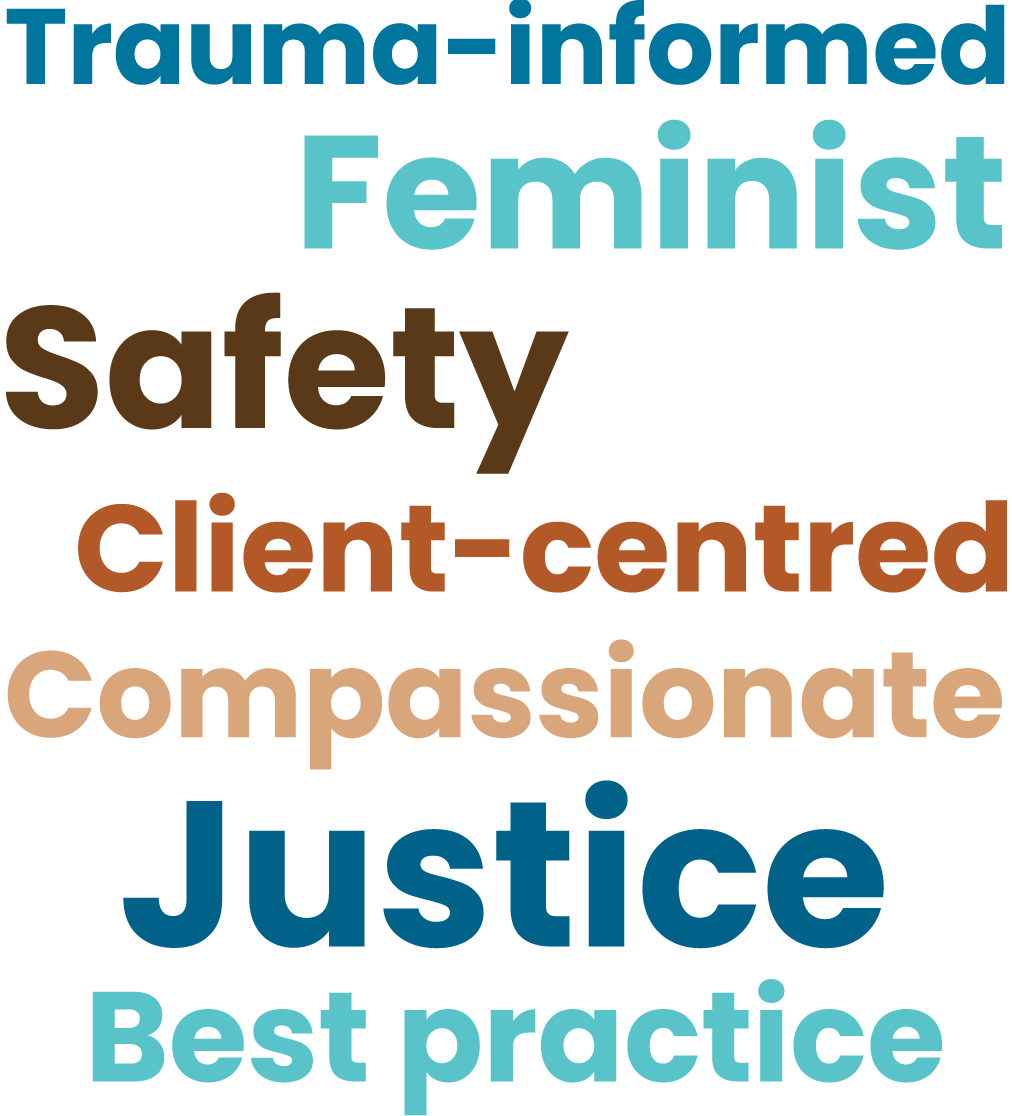
Our values
Our aim
The Queensland Sexual Assault Network (QSAN) is a collaborative network of services that provide specialist sexual assault response and prevention services throughout Queensland, advocating for victim-survivors and the specialist services who support them.
Our vision
All victim-survivors of sexual assault are supported, perpetrators are held accountable, and we are drivers of cultural change that values safety, justice and respect.
Services our members provide
Across the state of Queensland, our members provide many different types of specialist support to people who have survived sexual violence. Services include:
- Individual and group support
- Counselling
- Information and advice
- Referral
- Advocacy
Some members provide legal support, emergency relief, court support, help with accommodation, and parenting information.
Within these many services, there are also specialist services who help develop, share and deliver best practice responses to those who are:
- Aboriginal and Torres Strait Islander
- People from different cultures and languages
- People with thinking or learning disabilities
- LGBTIQ+
- Women and young women
- Men and young men
- Children
- Children and young people engaging in sexually harmful behaviours